Table of Contents
The Hand at a Glance
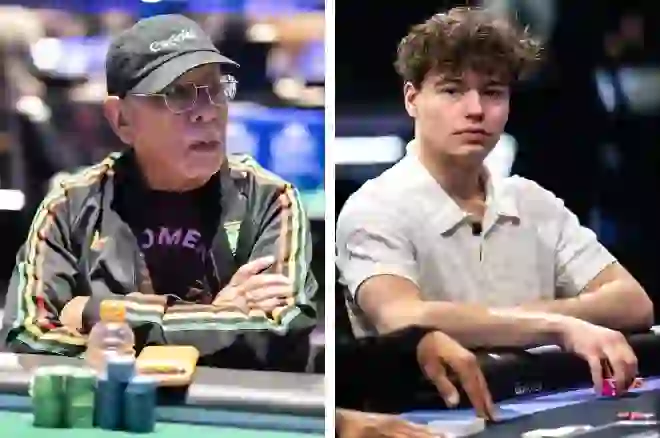
In the WSOP Main Event, Halford Fairchild held Q♥10♦ from the cutoff against Garry Gurevich's 2♠2♣ in the big blind. A viral video captured the moment Fairchild raised on the river and Gurevich folded, stunning the crowd. This hand is a masterclass in board texture, position, and how to outmaneuver a low pocket pair when the stakes are highest.
Pre-Flop Strategy
- •Suited connectors (core)
- •High-card offsuit hands
- •Pocket pairs (selective)
- •2♠2♣ — low pocket pair
- •GTO Wizard: outlier choice
- •Vulnerable to high-card boards
Fairchild opened from the cutoff with Q♥10♦ for 2 million — a standard opening in this position. Gurevich called from the big blind with 2♠2♣, creating a 4-million pot. GTO Wizard analysis shows the big blind's call range at this level is heavily tilted toward suited connectors and high-card hands, making the pocket pair an outlier. This imbalance meant Gurevich would need bluffing power post-flop to compensate for the range disadvantage.
Flop Dynamics
- •2♠2♣ vs Q♥10♦
- •No straight or flush draws
- •CO range dominated
The A♣K♥J♣ flop was a nightmare for the pocket pair. With no straight or flush draws, 2♠2♣ was left with roughly 15–20% equity. Fairchild held top pair with a strong kicker, giving him a dominant position. Both players checked — a passive choice that preserved both players' options. For Gurevich, checking was correct given the board favors Fairchild's range. For Fairchild, checking preserved his ability to trap. The board also eliminated any straightforward bluffing avenue for the pocket pair, forcing Gurevich to consider a later-street move.
Turn Decisions
The 7♠ on the turn added a backdoor flush draw for the pocket pair, but the odds were slim. GTO Wizard indicates a check or raise would have been preferable for Gurevich here. Instead, Gurevich bet 1.1 million — a deviation from GTO. Fairchild's call was textbook: he could have raised to protect his hand, but calling kept the pot at 6.2 million while maintaining the illusion of a wide range. By calling, Fairchild also forced Gurevich to commit further with a hand still far from the best, setting up the decisive river action.
River Showdown
The 3♦ on the river completed the board in Fairchild's favor. Gurevich led with a 3.1 million bet — a bluff according to GTO Wizard analysis. Fairchild raised to 10.1 million, forcing Gurevich into a pot-odds trap. The fold, while surprising to the crowd, was the correct play: Gurevich's range had no equity to continue against a likely value bet. The pot grew past 9 million before the raise, and Fairchild's counter sealed the hand. The decision to fold or call would have had a lasting impact on tournament standing.
Takeaways for Players
- Understand the board texture — AKJ is one of the most opener-favored boards. Always identify who the board serves before committing chips.
- Use position to control the pot — Playing from the cutoff gave Fairchild flexibility to size bets and apply pressure at the critical moment.
- Balance your range — Gurevich's call with 2♠2♣ was a GTO outlier; a balanced BB defense range features more suited connectors and high cards.
- Bet sizing is decisive — The 3.1M river bet leveraged perceived range; Fairchild's 10.1M counter-raise imposed an unacceptable price to call.
- Read live tendencies — Fairchild's quick table question before raising revealed confidence — a live tell that informed his decision.
- Manage pot size — Controlling stack-to-pot ratio through the turn set up the decisive river raise for maximum value.
For a related analysis of the same players in the $1,500 Millionaire Maker, see How Pocket Deuces Lost to Q♠10♠ at the WSOP Millionaire Maker.
Summary
Beating pocket deuces in the WSOP Main Event is not about luck — it is about exploiting subtle imbalances and making calculated bets that force your opponent into impossible decisions. Fairchild's patient play through the flop and turn, followed by a decisive river raise, is a blueprint for how to use position, board texture, and range reading to outmaneuver a weaker hand. Study this hand to build the skills that win at the highest levels.