Table of Contents
When a Shot Clock Turned a Classic Into a Controversy
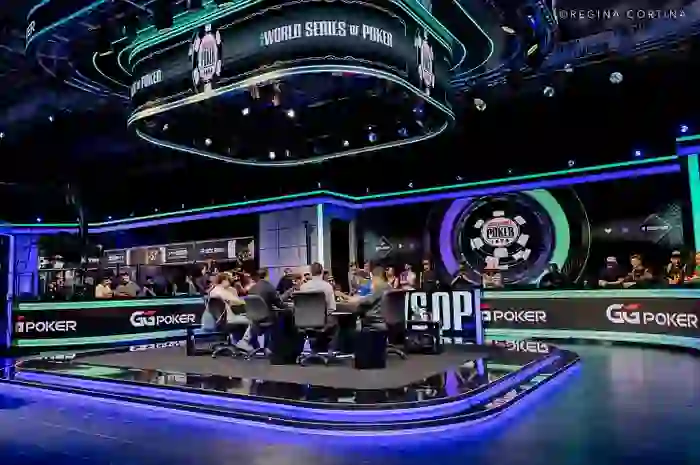
On Day 7 of the 2026 WSOP Main Event, the WSOP enforced a 60-second shot clock for each decision — the first time in the tournament's 57-year history. The trigger was a 15-minute stall by Loren Klein, who was angling for a pay-jump. The WSOP's response was swift, but it ignited immediate criticism: players, fans, and commentators argued that a rigid timer strips the game of the deliberate reasoning that distinguishes high-stakes poker from faster formats.
The clock remained in place through Days 7 and 8 as the field narrowed. On Thursday night, with the final table about to begin, the WSOP reversed course and announced unlimited think time would be restored. The reversal drew relief from many pros but also fresh criticism. Harry Gandia called it a "goal-post shift" that undermined trust in the tournament's rule-making process.
Rule Tweaks: Third-Party Promos and the WSOP's New Standards
- •Third-party promos at Main Event allowed
- •No shot clock in history of the Main
- •Unlimited think time from start to finish
- •Third-party promos banned at Main
- •60-sec shot clock trialed Days 7–8
- •Clock removed for final table after backlash
Alongside the shot clock experiment, the WSOP introduced a ban on third-party promotions at the Main Event — a direct response to the 2025 Millionaire Maker scandal, in which outside promotional activity created conflicts of interest that compromised the integrity of the competition. The new rule drew praise from players who saw it as a step toward transparency, and criticism from those who viewed mid-season rule changes as an unfair shifting of the competitive landscape.
Together, the shot clock and promo ban signaled a WSOP willing to experiment with structural change — though the reversal on the clock suggested the organization remains responsive to player pressure when backlash is sharp enough.
From Dorm Room to $180,000: Faraz Jaka's Rise and Fall
While the rule debates dominated headlines, Faraz Jaka's personal story captured a different kind of attention. At 19, Jaka turned a $3,000 starting bankroll into $180,000 in a single semester by playing live dorm-room games and online cash tables. He began at $10/$20 NL online with a $500 buy-in, rapidly moved to $25/$50, and eventually reached $100/$200 heads-up tables on the Prima Network. His aggressive, bluff-heavy style caught the attention of seasoned players including Ram Vaswani and Prahlad Friedman.
By his junior year, Jaka had lost the entire bankroll and was more than $30,000 in debt. He described that period as the hardest year of his life. The recovery was methodical: he returned to fundamentals, grinding from $5 buy-ins after having played at the $20,000 level, and rebuilt both his bankroll and his approach to the game. Today he is a respected name on the tournament circuit.
Controversy, Community, and What It Means for Poker's Future
- •Clock strips the game of strategic depth
- •Mid-tournament rule changes are unfair
- •Goal-post shift undermines tournament trust
- •Clock combats deliberate stalling (15-min stall)
- •Integrity measure protects fairness
- •Final table exemption addressed player concerns
The 2026 season surfaced a consistent theme: the poker community demands fairness, transparency, and a voice in how the game is run. The shot clock debate, the promo ban, and ongoing scrutiny of private game conduct all point to a player base that is increasingly organized and outspoken. Organizers face a harder balancing act than before — between preserving poker's tradition of deep deliberation and adapting to a broadcast and competitive landscape that rewards decisive action.
Jaka's story adds a human dimension to this narrative. A dorm-room prodigy who crashed and rebuilt is exactly the kind of arc that attracts new players to the game and sustains the community's mythology around second chances. For a technical deep-dive into how top professionals navigate high-stakes decisions, see our analysis of Moneymaker's 2026 WSOP bubble call with J-9 against aces.
What Lies Ahead for Poker in 2027 and Beyond
The lessons from 2026 set a clear agenda for tournament organizers. Shot clock policies will likely be refined — whether by limiting enforcement to early stages, introducing player-controlled time banks, or building in clearer exemptions for final tables. Sponsorship rules will continue to tighten as the line between promotional content and competitive integrity sharpens. And the case for formal player advisory structures has grown stronger: mid-season rule reversals generate the very controversy they aim to resolve when players feel bypassed.
Poker in 2027 will be shaped by whether organizers can get ahead of these issues rather than reacting to them. The WSOP's 2026 experiment demonstrated both the appetite for modernization and the limits of top-down change in a sport where the community's voice carries real weight.
Summary
The 2026 WSOP Main Event will be remembered for two things: a shot clock that came and went within two days, and a promo ban that signaled a new standard for competitive integrity. Both changes sparked genuine debate. Alongside the rule controversies, Faraz Jaka's journey from a $3,000 dorm-room stake to $180,000 — and back to zero — reminds the poker world that the human stories at the table are as compelling as any structural debate about how the game is governed.