Table of Contents
Bet sizing is not cosmetic — the size you choose announces which hands you can hold. Postflop, two fundamental approaches exist: polarized sizing (large bets with nuts and bluffs, almost nothing in between) and merged sizing (small bets with a value-dense range from strong to medium hands). Choosing between them is not guesswork; it follows from which type of advantage you hold on the given board.
Polarized vs Merged: Key Differences
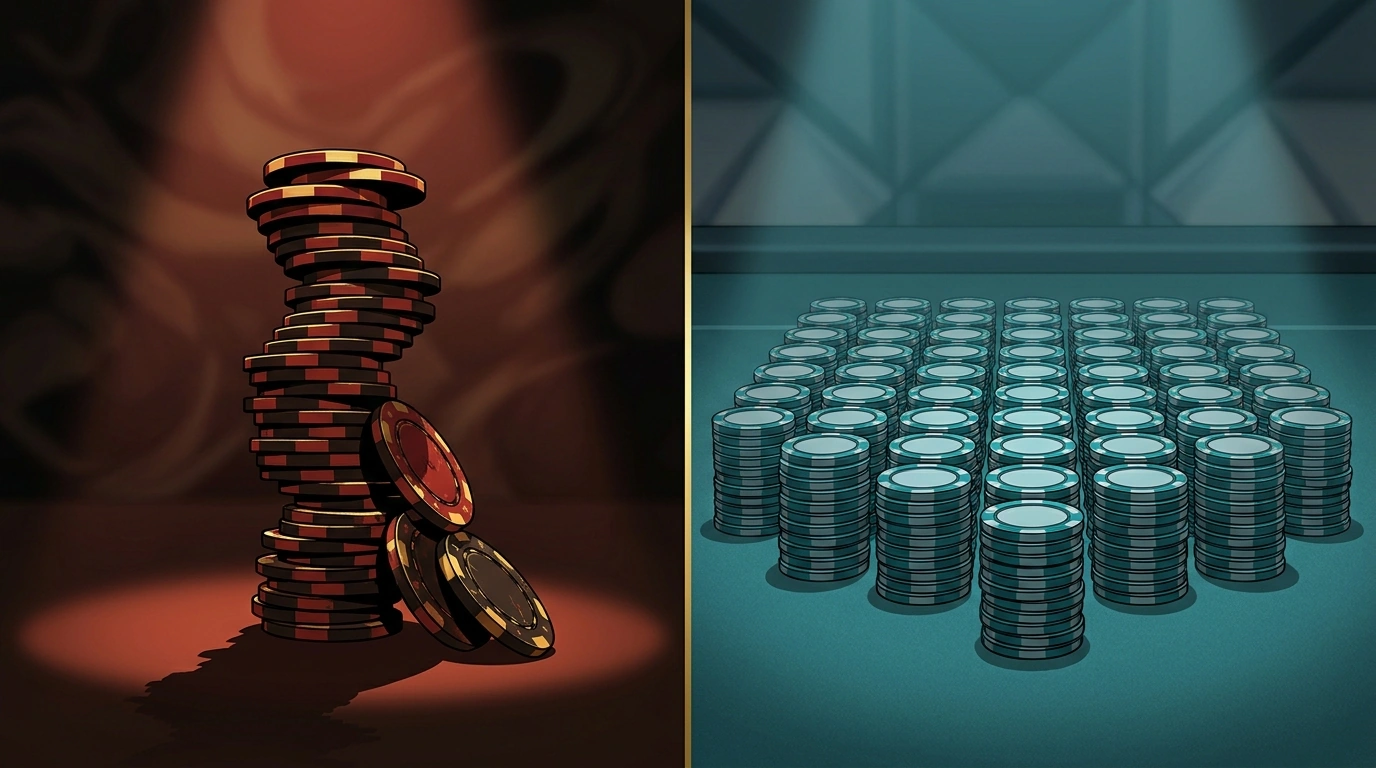
- •Bimodal: nuts + bluffs only
- •Bet 75%–200%+ pot
- •Requires nut advantage
- •Medium hands checked back
- •High bluff frequency needed
- •Dense ladder: strong-to-thin value
- •Bet 25–55% pot
- •Requires range advantage
- •Medium hands bet for value
- •Very few bluffs carried
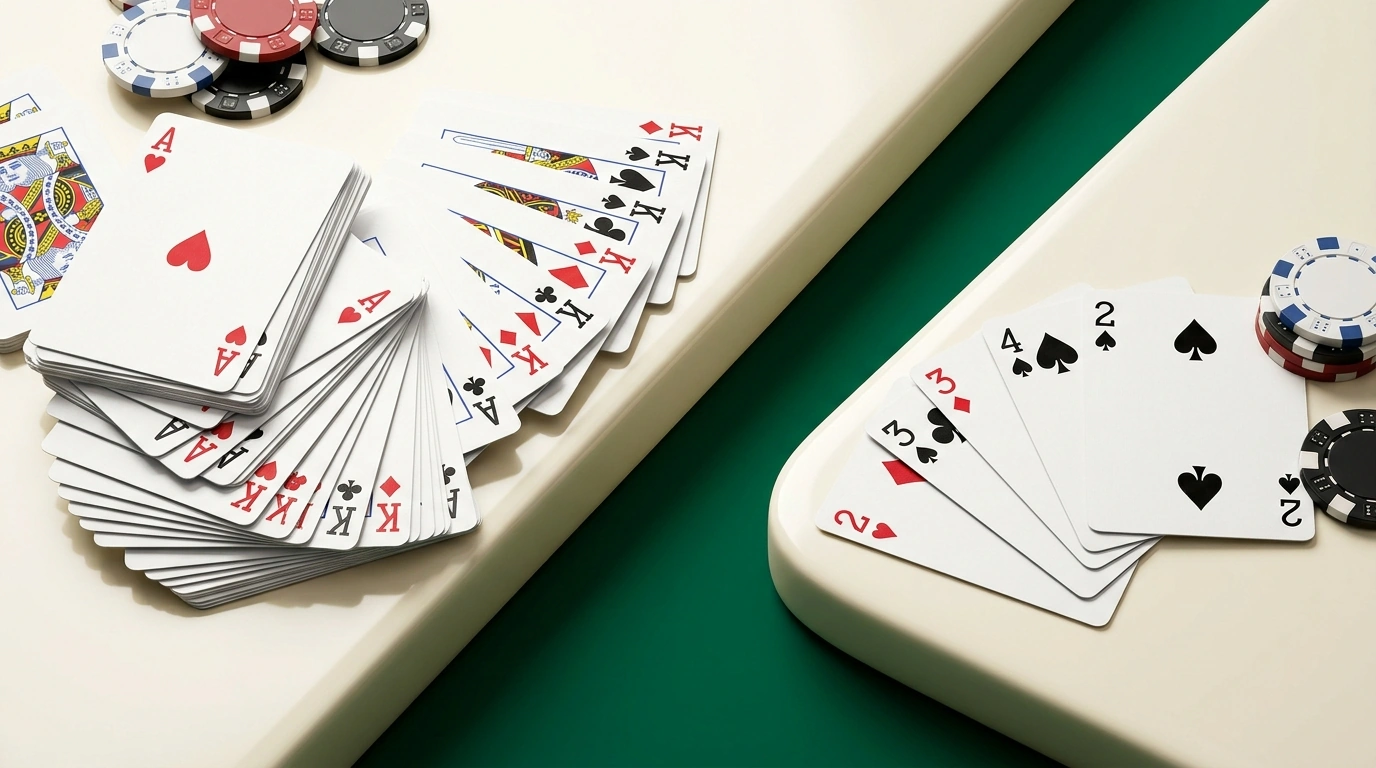
A polarized range is bimodal: you bet the top of your range (sets, two-pair, flushes, straights) and the bottom (low-equity hands that can represent the top), while medium-strength hands are checked back. A merged range bets a dense block of strong-to-medium value hands, carrying very few pure bluffs.
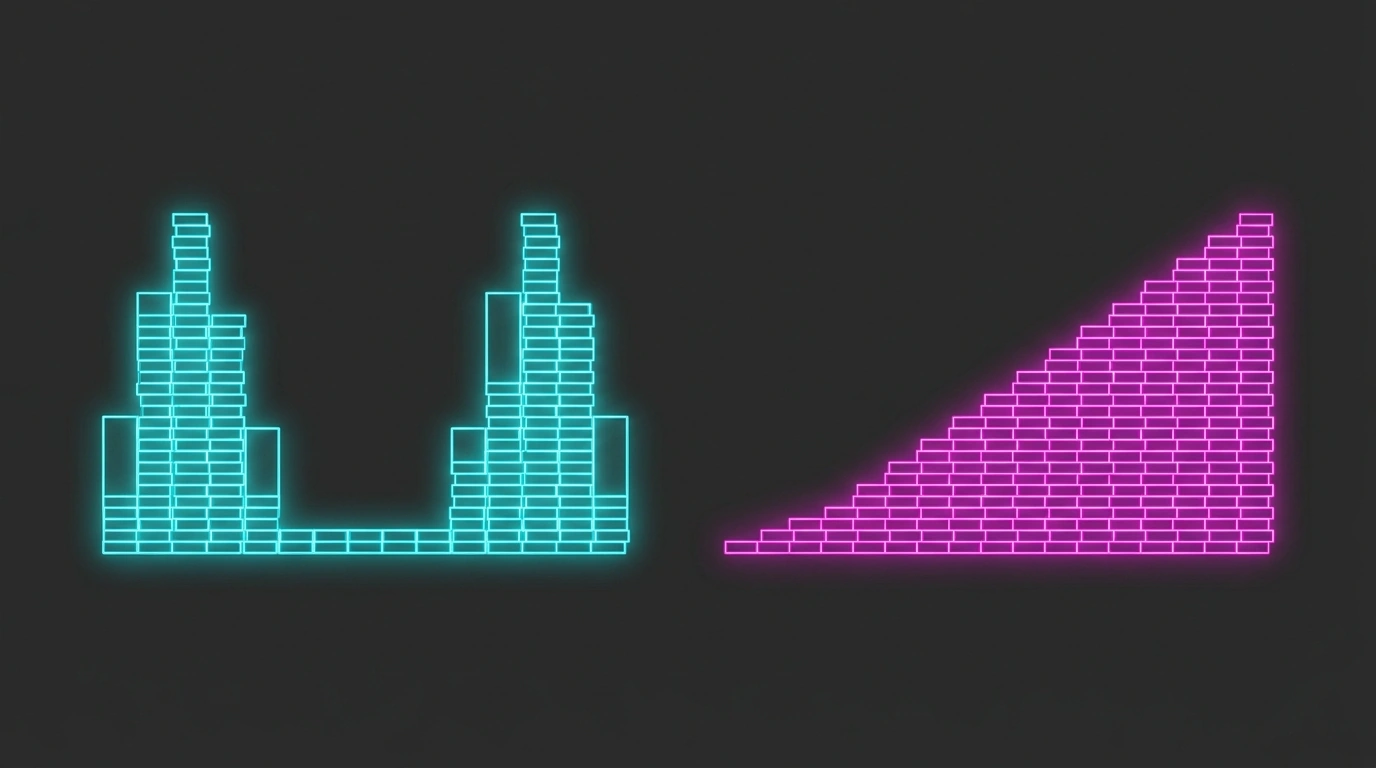
- Polarized sizes: 75–100% pot; rivers frequently use 125–200%+ overbets.
- Merged sizes: 25–40% pot (probe/block bet), 50–55% pot (half-pot).
How to Choose: Nut Advantage vs Range Advantage
- Nut advantage → polarize, use large sizes. When you hold more nut combos than the opponent (e.g., BTN c-betting an A-high board where the BB cannot have AA), large and overbet sizes are coherent. The classic example is the preflop aggressor on an Ace-high board — the raiser can hold AA, AK, AQ while the caller cannot. Medium hands move to your checking range.
- Range advantage without nut edge → merge, use small sizes. On dry low boards (7-2-2 rainbow), neither player holds nutted hands often, but the preflop raiser's overall equity distribution is stronger. A 25–33% c-bet extracts value across the range without bloating the pot. Small sizes keep weak-but-ahead hands extracting value without risk of being raised off equity.
- Neither advantage (contested board) → check at high frequency. On highly connected boards (JT9 two-tone), the caller's range hits straights and two-pairs. Forcing a polarized or merged bet is a mistake — checking 50%+ is correct.
Key rule: You can only use a large size credibly if you actually have nut hands in your range. Without top-of-range hands, a 100%-pot bet is incoherent — your opponent can call wider and punish you.
How Size Shapes Your Range — and the Opponent's Defense
Once you announce a size, your own range is constrained as much as your opponent's. A 100%-pot bet tells your opponent you cannot credibly hold one-pair hands below top pair. A 25%-pot bet cannot represent a polarized range — betting a nut flush for a quarter pot gives up too much value.

The opponent must defend according to Minimum Defense Frequency (MDF = 1 − bet ÷ (bet + pot)):
| Bet size (% pot) | Alpha (bluff break-even) | MDF (must defend) |
|---|---|---|
| 25% | 20% | 80% |
| 33% | 25% | 75% |
| 50% | 33% | 67% |
| 75% | 43% | 57% |
| 100% (pot) | 50% | 50% |
| 150% | 60% | 40% |
| 200% | 67% | 33% |
Against merged small bets (25–33% pot), the defender must continue with 75–80% of hands — folding top pair is almost always a mistake. Against polarized overbets (150–200%), even top pair with a medium kicker can be correctly folded, as the MDF is only 33–40%.

Bluff-to-Value Ratios by Size
For a bet to be unexploitable, bluffs must match the pot odds offered to the caller. At 100% pot the caller gets 2:1 (needs 33% equity), so the range needs roughly 1 bluff per 2 value hands. Overbets allow more bluffs because the caller needs higher equity to continue:
- 25% pot bet: ~1 bluff per 4 value hands
- 50% pot bet: ~1 bluff per 3 value hands
- 100% pot bet: ~1 bluff per 2 value hands
- 150% pot bet: ~2 bluffs per 3 value hands
Summary
Nut advantage → polarize with 75%–overbet sizes; check medium hands. Range advantage → merge with 25–50% sizes; bet a value-dense range with few bluffs. Size selects your range: large bets eliminate medium hands; small bets eliminate air. Against small merged bets, folding top pair is a mistake. Against polarized overbets, folding top pair with a medium kicker is often correct. Get these two concepts right and every postflop sizing decision becomes a logical consequence of board structure.

Related reading
This article was prepared by the Poker GTO Lab editorial team for educational purposes, drawing on widely published solver outputs, training content, and preflop charts. The ranges and frequencies shown are representative tendencies; the true optimum depends on stack depth, opponents, and table rules. This site does not promote gambling.