Table of Contents
Revolutionizing Heads-Up Play
- •Fixed GTO balance ranges
- •No opponent modeling
- •Limited customization
- •Generic strategy output
- •Tailored opponent tendencies
- •Preflop-to-river coverage
- •Exploitative line adjustment
- •Pure skill-testing environment
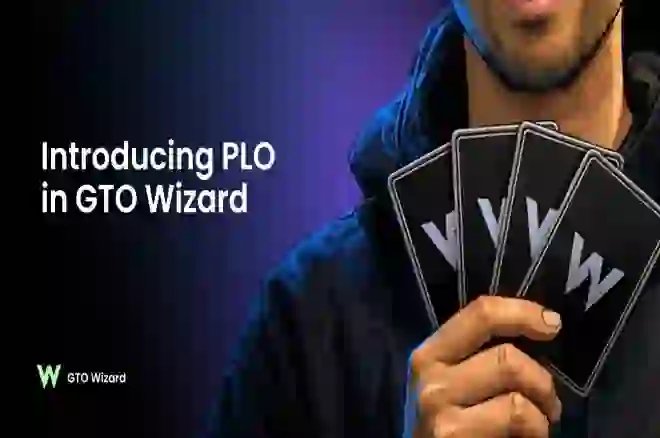
GTO Wizard's 2026 update delivers a fully customizable heads-up PLO solver covering every street from preflop to river. Instead of relying on generic GTO balance, players can now tailor strategies to match a specific opponent's tendencies—tight vs. loose, aggressive vs. passive—and see exactly how the optimal line shifts. The result is heads-up play that rewards skill rather than rote memorization.
"Heads-up is the most skill-intensive format in poker. Most hands are obligated to play, so edges are magnified because there's nowhere to hide. Every mistake, every imbalance, every exploitable tendency becomes more obvious heads-up." — GTO Wizard Blog — (see original)
Targeted Exploitation with Nodelocking
Nodelocking is the most powerful new addition. Fix a frequency at any decision point—say, locking an opponent's 3-bet frequency to 5%—and the solver recalculates every other branch of the hand to find the least-exploitable counter-strategy. This process can be applied across multiple streets, letting you model a full pattern of mistakes and find the optimal counter to each one.
Deepening Tournament Strategy via Post-Flop ICM
- •Maximize EV per hand
- •No prize pool pressure
- •Simpler equity distribution
- •Stack preservation not critical
- •Prize structure factored in
- •Stack survival matters
- •Bounty values configurable
- •Push/fold spots precisely calibrated
The update adds post-flop ICM solutions for both cash games and multi-table tournaments. Configure prize structures, stack sizes, and bounty values to generate realistic tournament scenarios. The engine handles larger trees without sacrificing speed, making it practical to study critical push-or-fold spots—such as bubble decisions or final-table stack preservation—using data that reflects the actual tournament environment.
Enhanced Study and Trainer Tools
- •Improved filtering & subcategories
- •New preflop hand range matrix
- •Breakdown tab: your line vs solver
- •Side-by-side deviation analysis
- •Multi-tabling support
- •Drill-down drills
- •Predefined player profiles (Maniac, etc.)
- •Performance statistics tracking
Study mode now features improved filtering, subcategory organization, and a new preflop hand-range matrix. The breakdown tab places your chosen line next to the solver's recommendation side by side, making deviations instantly visible. In trainer mode, multi-tabling, drill-down drills, and predefined player profiles (such as a "maniac" or "glass cannon") give a realistic training environment where persistent tendencies apply at every decision point.
Speed and Scalability: Engine Improvements
River spots in PLO now solve roughly twice as fast as the initial launch, maintaining 0.1% pot exploitability. Maximum tree size has increased for deeper stack solves. The same engine upgrades apply to the No-Limit Hold'em solver, where spots now compute between 3× and 6× faster. Faster solving means more iterations per session and quicker integration of new data into your game plan.
Looking Ahead: PLO5 and Mobile Expansion
No release dates have been announced, but the development roadmap points to a 5-card PLO solver, an expanded preflop library, aggregated reports for batch analysis, and full mobile support. The 2026 PLO update provides the computational foundation for each of these features.
Summary
GTO Wizard's 2026 PLO update is a substantial step forward: a fully customizable heads-up solver, nodelocking for targeted exploitation, post-flop ICM for tournament realism, improved study and trainer tools, and a solver engine that is up to 6× faster in NLHE spots. For serious PLO and NLHE players, these tools make it meaningfully easier to identify and close the gaps in your game.