Table of Contents
When the opponent bets the river and your hand is “medium strength,” you face the hardest decision: you lose to their value and beat their bluffs. Such hands are bluff catchers. This guide shows how to decide which ones to call with.
The essence is blockers
- •Blocks their value
- •Reduces strong hands
- •Blocks their bluffs
- •They're value-heavy
When you hold several similar-strength hands, choose which to call with based on blockers (cards that remove the opponent’s holdings):
- Call with hands that block value — cards that reduce the chance they hold a strong hand.
- Fold hands that block bluffs — if you hold their bluff candidates, they can only have value.
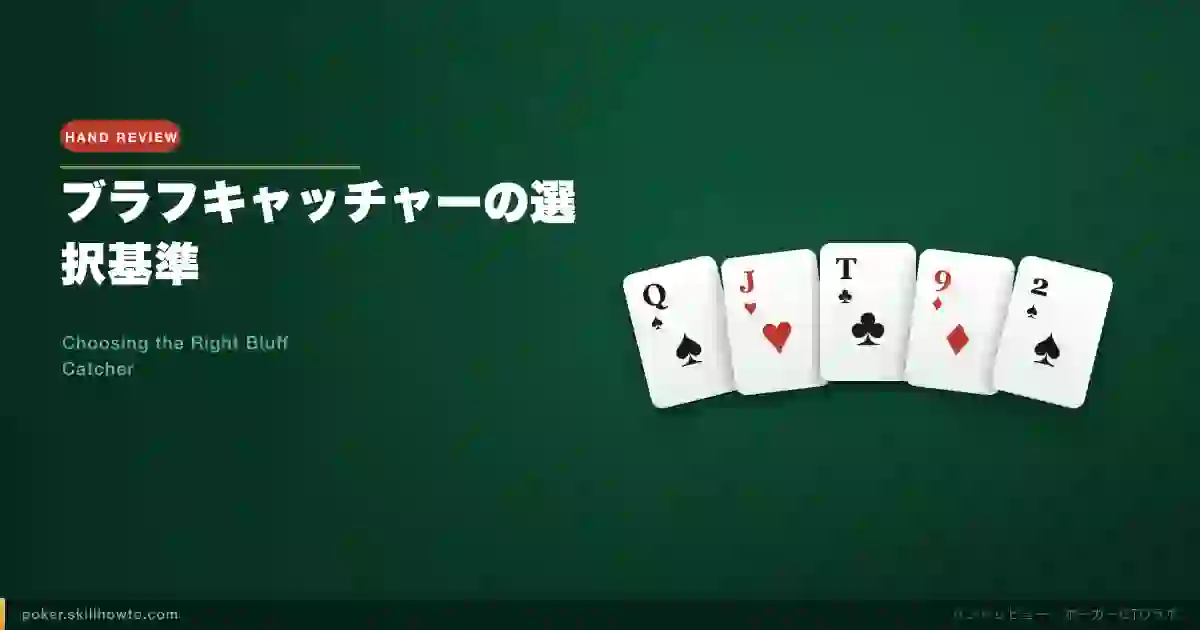
Example: board A♠K♥7♣ 2♦ 5♠
You call a BTN open from the BB, check-call flop and turn, and the opponent bets pot on the river. You hold A♣Q♦ (top pair). Call?
Consider their bluffs: missed flush and straight draws (QJ, JT, suited connectors). Your Q blocks some straight-type bluffs, while holding an ace reduces their Ax value (AK, AQ). Top pair with a Q kicker is a classic medium bluff catcher included in your calling frequency.
Use MDF (minimum defense frequency)
Fold too often and their bluffs always print. The guardrail is MDF:
MDF = pot ÷ (pot + bet)
Example: against a pot-sized bet, MDF = 50%. You must defend about half your range or get exploited by indiscriminate bluffing. But MDF assumes the opponent bluffs at the correct frequency — against players who never bluff, just fold.
Bluff catchers to fold
- •Holds a card that reduces opponent’s value combos
- •Does NOT overlap their likely bluff candidates
- •Opponent’s range is bluff-heavy given your blockers
- •MDF threshold requires defense at this frequency
- •Holds a card that removes their bluff candidates
- •Opponent’s range shifts toward value when you block bluffs
- •Your call equity drops as bluffs become less likely
- •Folding prevents paying off their value-heavy range
Conversely, hands that block the opponent’s bluffs (e.g., you hold a missed flush draw that overlaps their bluff candidates) should be folded more often. The logic: “I hold their bluffs, so they’re weighted toward value.”
Summary
Modern bluff-catching is chosen by blockers, not raw strength: call with value-blockers, fold bluff-blockers. Use MDF to avoid over-folding, but make a big exception and fold against players who don’t bluff. That balance defines your river accuracy.
Related reading
This article was prepared by the Poker GTO Lab editorial team for educational purposes, drawing on widely published solver outputs, training content, and preflop charts. The ranges and frequencies shown are representative tendencies; the true optimum depends on stack depth, opponents, and table rules. This site does not promote gambling.